
What HGV LGV Bus and Coach Operators Need to Know
A vehicle defect can mean more than a repair bill. It can take a vehicle out of service, disrupt deliveries or passenger journeys, and leave your team scrambling to cover the work.
The latest DVSA enforcement data brings that risk into focus. Between April and June 2026, mechanical prohibition rates in DVSA’s Great Britain category were 27% for HGVs, almost 19% for buses and coaches, and 70.75% for LGVs selected for mechanical checks.
For fleet operators, the practical question is straightforward: are your checks finding defects early, and can you show what happened next?
What did the latest DVSA checks find
Published on 17 September 2026, the updated data includes checks carried out at the roadside and operators’ premises. In the latest available quarter, April–June 2026, DVSA recorded:
| Vehicle group — Great Britain category | Mechanical checks | Mechanical prohibitions | Prohibition rate |
| HGVs | 3,178 | 858 | 27.00% |
| HGV trailers | 1,636 | 444 | 27.14% |
| Buses and coaches — PSVs | 828 | 157 | 18.96% |
| LGVs | 1,258 | 890 | 70.75% |
That means more than one in four HGV and trailer mechanical checks in these categories resulted in a prohibition.
These are enforcement results, rather than a representative survey of fleets on Britain’s roads. They should not be interpreted as the percentage of all HGVs, LGVs, buses or coaches that are unsafe.
They give operators of every fleet size a reason to review how effectively their inspection and maintenance processes work.
Tyres topped the defect tables
Tyre condition was the leading prohibition defect category for HGVs, LGVs and PSVs in April–June 2026.
In DVSA’s separate defect tables, tyre condition prohibition defects were recorded against 7.62% of HGVs inspected and 6.29% of PSVs inspected. Brake systems and components also featured prominently, at 2.00% for HGVs and 2.58% for PSVs.
These percentages relate to all vehicles inspected in each defect table. A vehicle can have more than one defect, so the percentages should not be added together.
For transport managers, the figures highlight the value of consistent checks, clear defect descriptions and timely action. A completed report is only useful if the inspection behind it was thorough and any problems receive the right response.
Daily checks need to work alongside planned inspections and maintenance appropriate to each vehicle. They serve different purposes within the same roadworthiness process.
For van fleets, the LGV figures deserve attention. Of 1,258 mechanical checks in the Great Britain category, 890 resulted in prohibitions. Separately, 742 of 1,080 LGV weight checks resulted in overload prohibitions, a rate of 68.70%. These figures concern selected enforcement checks and do not establish a failure rate for all vans.
In the separate roadside LGV defect table, covering vehicles up to 3,500kg, tyre condition defects were recorded against 22.68% of vehicles inspected, direction indicator defects against 15.83%, and body security defects against 10.06%. For van operators, this reinforces the value of consistent pre-use checks, defect follow-up and load control.
For bus and coach operators, the latest data also highlights defects involving:
- Seat belts and supplementary restraint systems: 2.13% of PSVs inspected.
- Doors and PSV passenger doors: 1.91%.
- Suspension: 1.80%.
Passenger vehicle checks need to reflect the equipment and risks of the vehicles being operated. Managers also need visibility of reported faults and the action taken to resolve them.
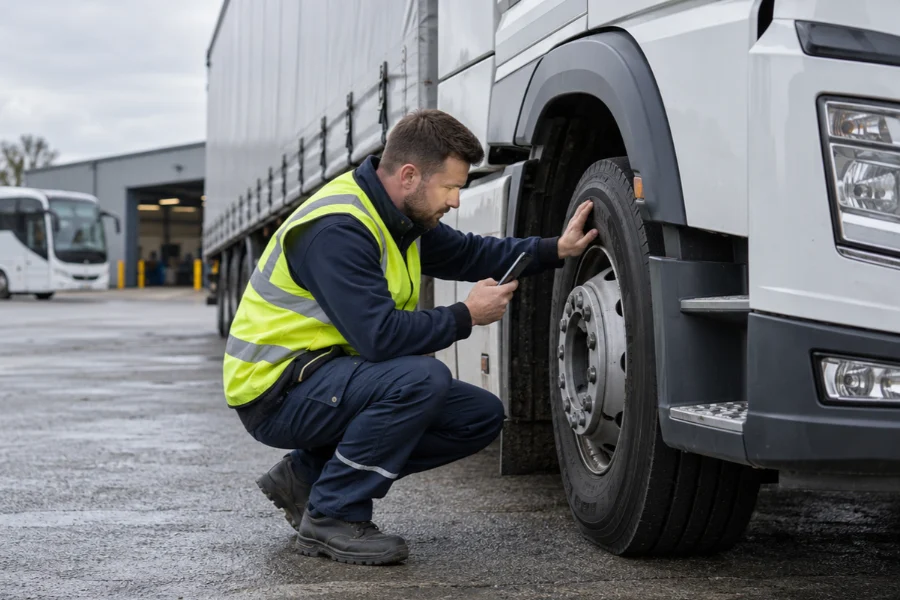
Think about a driver finding tyre damage before leaving the depot.
How quickly does the report reach the transport manager? Does the workshop receive enough detail to assess the problem? Can everyone see whether the repair is outstanding or complete?
When information sits across paper forms, messages and separate spreadsheets, answering those questions can take longer than it should. That creates extra administration at the point when your team needs to act.
A connected process makes it easier to follow a defect from the initial report through to the recorded repair.
How Vehocheck helps you take control
Vehocheck brings vehicle checks, defect reporting, fleet management and workshop activity together, helping drivers, managers and technicians work from the same information.
The Vehocheck Vehicle Defect Reporting App supports guided inspections and allows drivers to include photographs of defects. Alerts notify the relevant manager when reports are submitted, helping the team understand the issue and respond.
Checks can also be recorded without a signal and uploaded when connectivity returns.
Vehocheck Fleet Management helps managers identify new and outstanding defects, maintenance tasks and vehicle documentation. This gives your team a clearer view of what needs attention.
Vehocheck Workshop Management supports repair management, job cards, inspection scheduling and digital maintenance records. Your team can follow workshop activity and access vehicle repair and service histories in one place.
Software supports the process; thorough inspections, sound decisions and competent repairs remain essential.
Put your own process to the test
Could you quickly identify every outstanding defect across your fleet? Could you retrieve a vehicle’s check and repair history without chasing paperwork?
If those tasks take too much time, explore how Vehocheck could simplify them.
Start your free 30-day trial and see how connected checks, defect reporting and maintenance records could work for your fleet.
Prefer a guided introduction? Request a demonstration to discuss your current procedures and see the features relevant to your operation.
Data Sources
Driver and Vehicle Standards Agency (DVSA), Vehicle enforcement data for Great Britain, updated 17 September 2026. Figures quoted relate to April–June 2026, using these tables:
- DVSA/ENF/01: Vehicle enforcement checks at roadside and operators’ premises.
- DVSA/ENF/08: Top 10 prohibition defects for HGV vehicles.
- DVSA/ENF/10: Top 10 prohibition defects for public service vehicles (buses and coaches).
- DVSA/ENF/11: Top 10 prohibition defects for LGVs inspected at roadside.
Read the full DVSA enforcement report and data tables: https://www.gov.uk/government/statistical-data-sets/vehicle-enforcement-data-for-great-britain
The data reflects vehicles selected for enforcement checks and should not be interpreted as representative of all vehicles or operators.
About Vehocheck

Vehocheck is a fleet management and compliance software solution for operators, drivers and workshops, which provides a fully traceable vehicle maintenance, compliance and repair audit for all your assets or vehicles.
The process from vehicle defect identification and managing the repair is enhanced through our workshop job card system, customised reporting to highlight driver behaviour and vehicle issues, with additional in-depth repair cost analysis.
By instantly delivering crucial asset or vehicle defect information, the procedures for correcting these issues can be expedited; enabling companies to maintain a productive, safe and compliant fleet.